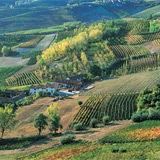



Nebbiolo is a red Italian grape variety predominately associated with the Piedmont region where it makes the (DOCG) wines of Barolo and Barbaresco. Nebbiolo is thought to derive its name from the Piedmontese word 'nebbia' which means 'fog.' During harvest, which generally takes place late in October, an intense fog sets into the Langhe region where many Nebbiolo vineyards are located. Alternative explanations refers to the fog-like 'bloom' that forms over the berries as they reach maturity or that perhaps the name is derived from the Italian word 'nobile', meaning noble.
Although there are dozens of clones and Nebbiolo is prominent, and famous for producing world renowned wines, the reality is that this variety makes barely 3% of all the wines produced in Piedmont. There are twice as many acres planted with Dolcetto and ten times as many planted with Barbera.
Part of the reason for this, Nebbiolo is one of the more problematic grapes for both viticulturists and winemakers. It is very sensitive to both soil and geography and can yield wines that vary widely in body, tannin and acidity, as well as aroma and flavour complexity. A late ripening grape, the vines need the best exposures, especially in cooler climates, in order to reach maturity. It performs better in calcareous rather than sandy soils. Nebbiolo grape skins are thin, but quite tough and fairly resistant to molds and pests.
Some winemakers feel that Nebbiolo is even more difficult to work with than Pinot Noir. It can be changeable, moody and unpredictable while undergoing typical cellar and aging procedures.
Nebbiolo produces lightly coloured red wines that can be highly tannic in their youth with scents of liquorice and roses. As they age, the wines take on a characteristic brick-orange hue at the rim of the glass and mature to reveal other aromas and flavours such as violets, liquorice, wild herbs, cherries, raspberries, truffles and tobacco. Nebbiolo wines can reward years of aging to balance the tannins with other characteristics.